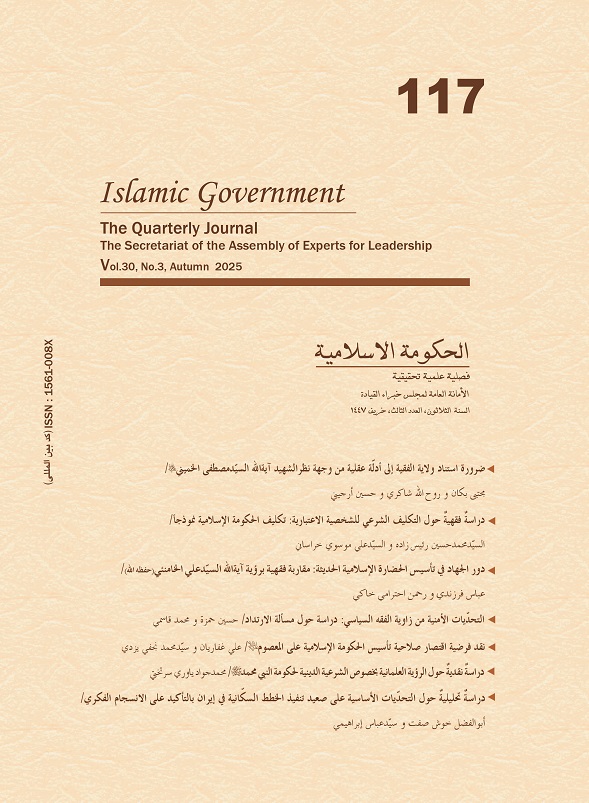
From the past to the present, some Arab neo-Mu‘tazilites or Iranian intellectuals, influenced by the atmosphere of secularism, believe, without regard to historical and hadith data and solely based on reference to some Qur’anic verses, that government in Islam is something secular and there is no legal (religious) evidence for the divine nature of the rule of the Messenger of God, and his duty is only religious guidance. The ultimate goal of this thought leads to the negation of Islamic government in the Period of Occultation. In response to the question of whether the Messenger of God is of divine legitimacy to govern, this research, drawing upon a critical approach based on all the propositions of Islamic texts, challenged their views and concluded that God chose His Messenger for the (divine) mission and absolutely obligated people to obey His Messenger and forbade them from following the oppressors and the despotic rule. The Messenger of God also repeatedly spoke of the divine nature of his government, and people also pledged allegiance to him and obeyed him on this basis. If the government of the Messenger of God was secular in natue, people should have pointed it out.
yavari, M. (2025). A Critical Analysis of the Secularists' View on the Divine Legitimacy of the Prophet Muhammad's Rule. Islamic Government, 30(117), 133–162.
MLA
yavari, M. "A Critical Analysis of the Secularists' View on the Divine Legitimacy of the Prophet Muhammad's Rule", Islamic Government, 30, 117, 2025, 133–162.
HARVARD
yavari, M. (2025). 'A Critical Analysis of the Secularists' View on the Divine Legitimacy of the Prophet Muhammad's Rule', Islamic Government, 30(117), pp. 133–162.
CHICAGO
yavari, M., "A Critical Analysis of the Secularists' View on the Divine Legitimacy of the Prophet Muhammad's Rule." Islamic Government, 30 117 (2025): 133–162,
VANCOUVER
yavari M. A Critical Analysis of the Secularists' View on the Divine Legitimacy of the Prophet Muhammad's Rule. Islamic Government. 2025;30(117):133–162 (In Persian).